

You might not expect a sturdy, low-slung dog breed from Ireland to make such a loyal companion, but the Glen of Imaal Terrier packs courage, calm and a gentle nature into a compact body. This versatile working dog was built for the tough landscape of its homeland. As a dedicated working dog, the Wicklow Terrier possesses immense stamina.
If you want a hardworking, quiet family dog that handles farm tasks and cuddles with equal skill, the Glen of Imaal Terrier is a dog breed that could be the right fit for you.
You’ll learn where the breed came from, what to expect in temperament and size, and how much grooming and exercise it needs. By the end, you’ll know whether this rare Irish terrier fits your home and lifestyle.
Key Takeaways
-
The Glen blends calm family manners with strong working instincts.
-
Expect a compact, tough dog that needs moderate exercise and moderate grooming. Regular maintenance ensures the coat remains weather-resistant.
-
The breed has a long Irish history and some specific health and care needs.
Glen of Imaal Terrier Origins and History

You’ll learn where the Irish Glen of Imaal Terrier began, how people saved this unique dog breed, and the jobs it did on Irish farms and in kitchens. These points explain why Glens look low and strong, why they stayed rare, and how kennel clubs helped protect them.
Roots in County Wicklow and Irish Heritage
The Glen of Imaal Terrier comes from the Glen of Imaal, a rugged valley in County Wicklow. This terrier breed was developed by farmers and crofters who needed stamina and a low, sturdy build to work on rocky hills and in tight burrows.
Local names like Wicklow Terrier or simply Glens show the breed’s close link to its home landscape in County Wicklow. This dog is one of the four distinct Irish terrier breeds, along with the Kerry Blue. Like the Kerry Blue, the Irish Glen of Imaal Terrier is known for grit.
Breeding mixed working terrier types and possibly small hounds shaped the dog’s compact body and rough coat. You can see this regional origin reflected in breed accounts from Irish breeders and historical notes about terriers in Wicklow.
This background explains why Glens differ in look and temperament from other Irish terriers.
Revival and Recognition as a Native Breed
By the early 20th century, the Glen of Imaal Terrier population had fallen low in numbers. A small group of dedicated owners in Ireland and abroad began selective breeding to preserve the type.
The Irish Kennel Club first recognised the breed in 1934, which helped record pedigrees and encourage responsible breeding. Support from the Irish Kennel Club remains vital for the survival of the breed today.
Later recognition by other kennel clubs increased interest and protections. The breed remained uncommon and is currently listed as a vulnerable native breed by several major kennel clubs. Official recognition helped stabilise numbers, but they remain a rare sight outside of their home country.
If you want to learn breed standards and modern history, the Glen of Imaal’s official club pages and kennel records give clear timelines of those efforts.
Role as a Working Terrier and Turnspit Dog
Glens served many practical jobs on farms in Wicklow. You’d find them hunting foxes, badgers and performing vermin control, working in tight earths where a low, muscular body was needed.
Their rough coat protected them from brambles and weather while working outside.
Some accounts also link Glens to the historical turnspit dog role, where dogs ran treadmills or turned spits in kitchens. That task required steady, strong dogs able to work in confined spaces.
Their mix of courage and calm made Glens useful on both field and farmstead, shaping the breed traits you see in family pets and working lines today.
Relevant reading on the breed’s local origins and history appears in breed histories and kennel club entries, which document the Glen’s path from Wicklow valleys to formal recognition.
Distinctive Features and Breed Standard

The Glen of Imaal Terrier is a distinctive dog breed that shows a low, sturdy body and a soft undercoat. This working dog has a strong, functional build.
You’ll notice a powerful head, short bowed forelegs, and a coat that can be tidied for show or left more natural for work.
General Appearance and Structure
You should expect a medium-sized, working terrier with a body longer than high. This proportion is a key trait of the Irish Glen of Imaal Terrier. The ideal body-length to height ratio is about 5:3, which gives the breed its low, ground-hugging outline. Shoulders are well laid back and the chest is wide and deep, extending below the elbows for breathing room and strength.
The neck is muscular and of moderate length, leading to a straight topline that rises slightly over a strong, well-muscled loin. Forelegs are short and bowed with feet that turn out slightly. Hindquarters are powerful with a good bend of stifle and good drive behind. This gives the Irish Glen the endurance needed to perform as a working terrier. The AKC breed standard emphasises balance and substance rather than extreme dimensions.
Coat Types and Recognised Colours
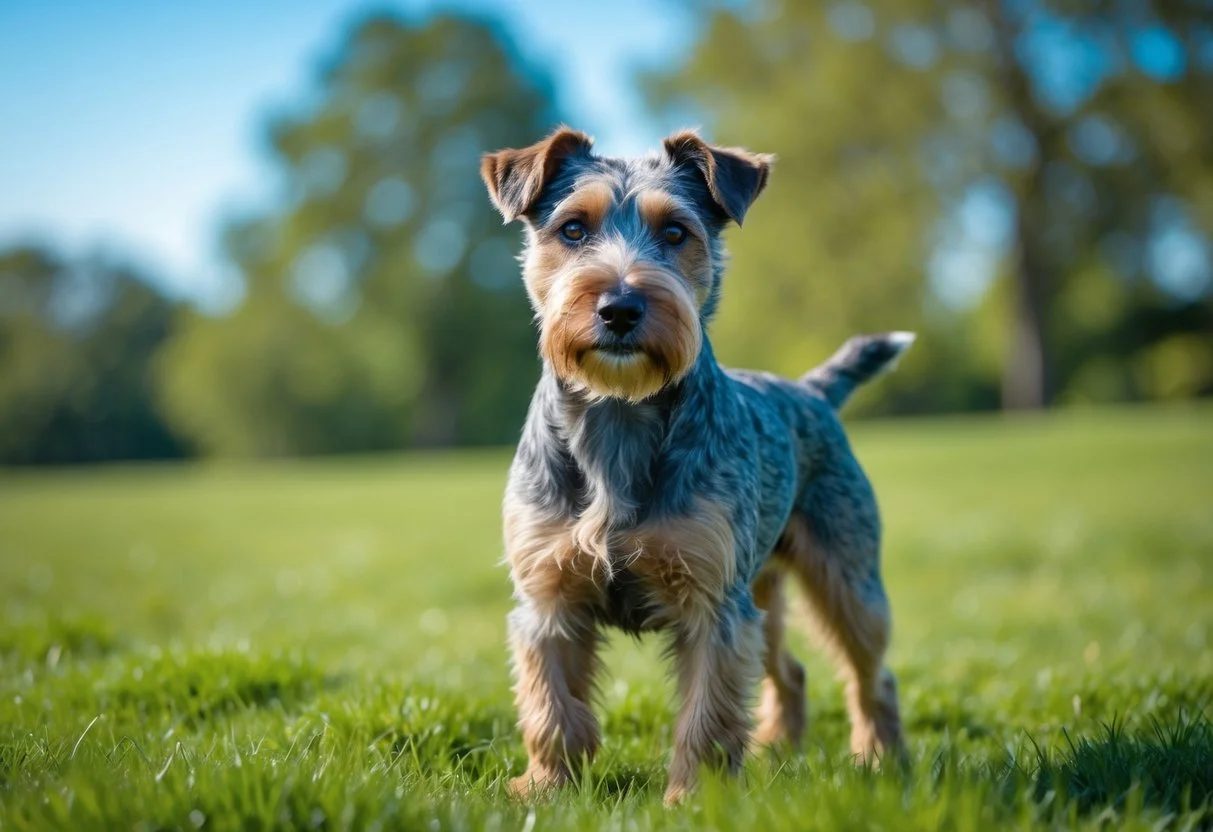
The Glen wears a medium-length double coat: a harsh outer coat over a soft undercoat. The texture gives weather protection and a low-shedding coat feel compared with some single-coated breeds. The coat may be tidied to present a neat outline, but over-trimming is discouraged. This maintains the authentic look of a hardy working dog.
Recognised colours include wheaten (from cream to red-wheaten), blue (shades from silver to slate but not black), and brindle. A wheaten Glen is a popular choice for many owners, but a red glen is also a beautiful and recognized variety. Regular brushing with a slicker brush helps remove dead undercoat and keeps the low-shedding coat healthy.
Unique Physical Traits
The head must be powerful but not coarse, with a well-defined stop and a muzzle that tapers slightly. Eyes are medium brown and set well apart. Ears are small and typically rose or half-prick ears; they fold back when the dog is relaxed and lift when alert.
The Glen’s forequarters are distinctive—bowed with turned-out feet—giving it a short, sturdy appearance. One unique trait is the glen sit, where the dog sits on its haunches with a very upright spine. The AKC breed standard describes this posture as characteristic of the breed’s functional anatomy. Tails are traditionally docked to about half-length in some standards but undocked tails are acceptable. These features combine to create a compact, sturdy build that still moves freely and with good reach and drive for a working terrier.
Temperament, Intelligence and Family Life

This breed is loyal, calm around the home, and brave when needed. It can be independent and stubborn at times, so steady leadership and regular mental work help keep it well behaved.
Personality and Behavioural Traits
The Glen of Imaal (often called a Glen or “Glennie”) is a steady and loyal family dog. You’ll find it less barky than some terriers but alert enough to act as a practical watchdog.
Its temperament mixes calm tolerance with a strong will. While their trainability is good when using positive methods, they can be independent. They are affectionate and sit with you on the sofa, yet also dig or chase if they smell small animals.
The breed shows clear intelligence suited to problem-solving and independent work. You should expect moments of stubbornness during training; short, consistent sessions with rewards work best.
Be aware of a natural prey drive. This high prey drive makes the Glen excellent at earthdog-type activities but means you should supervise around smaller pets.
Suitability for Families and Other Pets
The Irish Glen of Imaal Terrier is ideal for families with older children. Because of their sturdy nature and patient temperament, they are often recommended for homes with older children. They bond strongly with family members and become a loyal companion.
For very young children, close supervision is essential because the Glen’s sturdiness can accidentally knock little ones over.
If you have other dogs, early socialization helps the Glen fit in well. With cats and small mammals, the high prey drive can cause problems. When looking for puppies, ask about socialization with other animals.
The breed adapts to apartment living if you provide daily exercise and mental stimulation. A secure garden reduces the risk of chasing wildlife or bolting after a scent.
Socialisation and Mental Stimulation
Start socialisation early and keep it varied. Introduce your Glen to different people, places, noises and animals in calm, controlled steps. This reduces shyness and helps the dog stay confident around strangers.
Give mental work every day. Puzzle toys, scent games, and short agility exercises satisfy both intelligence and hunting instincts. You might also consider earthdog trials, which allow the Glen to use its natural burrowing skills in a safe environment.
Training should use positive reinforcement and clear rules. Consistent practice prevents boredom-driven behaviours like digging, chewing or excessive digging.
Mix physical walks with sniffing time. Letting your Glen explore scents gives mental exercise that plain walking cannot match.
For more breed details on temperament and care, see this Glen profile from The Spruce Pets (Glen of Imaal terrier guide).
Exercise, Training and Everyday Care

Glen of Imaal Terriers need a steady mix of walk time, play and focused training to stay healthy and happy. You should plan short bursts of activity, training sessions that reward good choices, and simple daily grooming.
Daily Exercise Needs and Activities
Aim for about 30–60 minutes of activity each day, split into two sessions when possible. A 20–30 minute walk in the morning plus a 15–30 minute play or recall session in the evening works well for many adults. Adjust to 10–15 minute play bursts for puppies and shorter, gentler walks for seniors.
Include variety: brisk walks, short moderate hikes on easy terrain, and interactive play like fetch or tug. Agility basics — tunnels, low jumps and weaving poles — give physical work and mental challenge. Watch for tiredness and avoid hot midday walks. Offer water and rest breaks on longer outings.
Training Techniques and Challenges
Use positive reinforcement: small tasty treats, praise and short play rewards work best. Keep sessions to 5–10 minutes for puppies and 10–15 minutes for adults. Practice basic obedience (sit, come, stay, heel) during walks and at home to build reliable recall and loose-lead walking.
Expect some stubbornness; Glens can be independent. Be consistent with rules and timing of rewards. For competitive owners, you can train for agility and obedience competitions by increasing distractions gradually and adding timed runs. Use simple clicker work or marker words to speed learning. Avoid harsh corrections; they harm trust and slow progress.
Creating a Safe and Enriching Environment
Make your home safe: secure fencing and checked garden gates prevent digging escapes and chasing. Provide chew toys, puzzle feeders and a rotation of toys to reduce boredom. A comfy bed and predictable feeding and walk times help lower stress.
Grooming stays moderate: weekly brushing, occasional bathing and nail checks keep coat and paws healthy. Trim nails if they click on hard floors. Combine grooming with calm praise so it becomes a positive routine. Regular vet checks and weight monitoring ensure exercise and diet match your Glen’s energy level.
Grooming and Coat Care

Keep the Glen of Imaal Terrier’s coat healthy with regular brushing and moderate grooming. Seasonal hand-stripping is necessary for this vulnerable native breed.
This dog breed needs a short, steady grooming routine to prevent mats and keep the coat weather‑resistant while helping you spot skin issues early.
Brushing and Hand‑Stripping
Brush your Glen at least twice a week with a slicker brush to remove loose hair and stop tangles from forming. Work in short, gentle strokes from neck to tail, paying special attention behind the ears and under the legs where mats start. Use a pin brush or comb for finishing and to check the undercoat.
Hand‑stripping the outer coat keeps the hard, wiry texture and clears dead hairs that brushing won’t pull out. You can learn to hand‑strip small areas yourself, or book a groomer every 6–8 weeks. If your dog dislikes stripping, ask the groomer to demonstrate technique so you can help at home.
Managing the Double Coat and Shedding
The Glen has a double coat: a coarse outer layer and a softer undercoat. During seasonal sheds, increase brushing to every day or every other day to control loose undercoat and reduce allergens in the home. A de‑slicker or rake helps remove undercoat without damaging the outer hairs.
Avoid over‑bathing; use a mild, dog‑specific shampoo only when dirty. Bathing too often strips natural oils and can make the coat brittle. After brushing, check skin for redness, dry patches or signs of allergy. If you see persistent itching or hair loss, speak to your vet about possible allergies or skin conditions.
Nail Trimming and General Upkeep
Check nails every 2–4 weeks and trim as needed so they don’t touch the ground. Use a sharp dog nail clipper and trim small amounts to avoid cutting the quick. If the quick shows in dark nails or you’re unsure, file instead or ask a groomer for help.
Include ear and dental checks in your routine. Wipe ears with a vet‑approved cleaner when they look dirty. Brush teeth several times a week with dog toothpaste to reduce dental disease. Keep grooming sessions short and positive with treats so your Glen learns to enjoy being handled.
Health, Nutrition and Lifespan
As a hardy dog breed, Glen of Imaal Terriers are sturdy but have a few health issues to watch for. Finding a reputable breeder is the best way to ensure a healthy puppy. A reputable breeder will provide health screenings for the Irish Glen of Imaal Terrier.
Proper testing, routine vet care, and a balanced diet help most Glens live into their teens.
Common Health Considerations
Watch your Glen for joint and eye issues, heart changes, and signs of spinal disease. Hip dysplasia and elbow dysplasia are concerns for this terrier breed and can cause lameness or stiffness; look for reduced activity, trouble rising, or a limp. Have your dog checked by a vet if you notice these signs.
Progressive retinal atrophy is a significant health concern that leads to gradual vision loss. Early signs of progressive retinal atrophy often include night blindness or a reluctance to enter dark rooms. Regular eye checks with a veterinary ophthalmologist help detect these changes early.
Degenerative myelopathy affects the spinal cord and causes hind-limb weakness. You might see wobbliness, knuckling paws, or difficulty climbing stairs. Report symptoms of degenerative myelopathy quickly to your vet for assessment and planning.
Heart disease is less common but possible. Listen for coughing, reduced stamina or difficulty breathing. Annual vet exams and heart checks for older dogs help catch problems sooner.
Breed-Specific Conditions and Genetic Testing
Breeding organisations recommend DNA and health screening to lower inherited disease risk. For eye disease, ask breeders about PRA testing before you choose a puppy. The Glen breed health plan also lists recommended checks for common issues.
Ask for hip dysplasia and elbow dysplasia scoring from parents to reduce the risk of joint issues. Orthopaedic screening helps breeders and owners spot problems early. If parents have clear scores, Glen of Imaal Terrier puppies have a lower chance of painful joint disease.
Discuss DM with breeders and vets. Many breeders following the guidelines of the Irish Kennel Club ensure their dogs are tested. Testing for DM is crucial for this vulnerable native breed to ensure long-term health. Keep records of any diagnoses for your vet.
Join breed clubs and use the Glen health archive to find up-to-date guidance on tests and breeding best practice. This supports healthier puppies and helps you make informed choices when buying one of the available Glen of Imaal Terrier puppies. The Glen of Imaal Terrier Owners and Breeders Association is an excellent resource for new owners.
Feeding and Nutrition for Optimum Health
Feed age-appropriate food: high-energy, protein-rich puppy food until about 12 months, then switch to a quality adult diet. Look for named meat sources, balanced fats, and controlled calories to avoid rapid growth and excess weight.
Control portion sizes and weigh your dog monthly. Glens can gain weight easily, which adds stress to hips and elbows. Use measured cups or a kitchen scale and adjust based on body condition—feel ribs with a light cover of fat and see a tucked waist.
Include joint-support nutrients if your vet recommends them, such as omega-3 fatty acids or glucosamine. These help dogs with early joint changes but discuss dosage with your vet first.
Keep vaccinations, parasite control and dental care on schedule. Puppies need core vaccines and boosters; your vet will give a timetable. Good nutrition plus routine veterinary care gives your Glen the best chance at a healthy lifespan of around 12–15 years.
For guidance on breed health plans and testing programmes, see the Glen of Imaal Terrier health resources at Glen Health UK (glenhealth.co.uk) or consult with major breed clubs. They provide essential information for any family dog owner looking to keep their pet healthy.
Frequently Asked Questions
These answers cover training methods, daily exercise plans, feeding and grooming routines, and favourite activities you can use right away to care for a Glen of Imaal Terrier.
What’s the best way to train a Glen of Imaal Terrier?
Use short, consistent training sessions of 5–10 minutes several times a day. This dog breed responds best to positive reinforcement.
Reward calm behaviour with treats and praise so your Glen learns fast.
Start socialising early with different people, dogs and places to reduce timidity around strangers. Keep training positive; avoid harsh corrections because Glens respond better to encouragement.
How do you ensure a Glen of Imaal Terrier gets enough exercise?
Give your Glen 30–60 minutes of activity each day, split into walks, play and mental games. A brisk 20–30 minute walk plus a 10–20 minute play session often works well.
Use a secure garden or a long lead for off‑lead recalls because they have a strong prey drive. Swap routes and toys regularly to keep walks mentally stimulating.
Can Glen of Imaal Terriers adapt well to apartment living?
Yes, the Glen of Imaal Terrier can adapt well to small spaces if you meet their exercise needs. They are great for active urban families, including those with older children. This dog breed thrives when provided with regular walks and games.
Short training sessions and indoor enrichment help them settle quickly indoors.
Provide indoor enrichment like puzzle toys and scent games so they stay occupied when you are out. Make sure your flat has a quiet spot where they can relax.
What should we feed our Glen of Imaal Terrier to keep them healthy?
Feed a high‑quality complete dog food formulated for small or medium breeds, adjusted for age and activity. Measure meals and avoid free‑feeding to prevent weight gain.
Check dietary needs with your vet, especially if your Glen is very active or older. Fresh water must always be available.
How often should a Glen of Imaal Terrier be groomed?
Brush their medium double coat at least twice a week to remove loose hair and prevent matting. Hand‑stripping a few times a year keeps the coat’s harsh texture for show dogs; otherwise, tidy trimming is fine.
Bathe only when needed and check ears, teeth and nails regularly. Nail trims every 3–6 weeks are typical depending on wear.
What activities do Glen of Imaal Terriers enjoy the most?
They enjoy scent work, short agility courses and earthdog or digging games that tap their hunting instincts. Toy fetch and tug in a secure space also suit their energy.
Calmer activities like cuddle time after exercise help build trust and calm their terrier drive. Mix physical and brain games for a happy, balanced dog.